🔥 Primary Symptoms
SFN affects unmyelinated nerve fibers responsible for pain, temperature sensation, and autonomic functions. Symptoms typically start in the feet and may progress upward.
🦶 Sensory Symptoms
Burning Pain
Most common symptom - Often described as walking on hot coals or having feet on fire.
- Usually worse at night
- May be triggered by light touch or clothing
- Can be constant or intermittent
- Often starts in toes and spreads upward
Tingling & Prickling
Pins and needles sensation, electric shock-like feelings
- Often described as "ants crawling" sensation
- May occur spontaneously
- Can be triggered by movement or pressure
Numbness
Loss of sensation, particularly to light touch and temperature
- May not notice cuts or injuries
- Difficulty distinguishing hot from cold
- Can lead to balance problems
Allodynia
Pain from normally non-painful stimuli
- Bedsheets or socks may cause pain
- Light touch becomes painful
- Even air movement can trigger discomfort
Hyperalgesia
Increased sensitivity to painful stimuli
- Minor injuries cause severe pain
- Pain lasts longer than expected
- Lower pain threshold
🫀 Autonomic Symptoms
Temperature Regulation Issues
- Reduced or absent sweating (anhidrosis)
- Overheating in warm environments
- Heat intolerance
- Dry skin
Gastrointestinal Problems
- Nausea and vomiting
- Gastroparesis (delayed stomach emptying)
- Diarrhea or constipation
- Abdominal pain
- Early satiety (feeling full quickly)
Cardiovascular Symptoms
- Orthostatic hypotension (dizziness when standing)
- Heart rate variability issues
- Exercise intolerance
- Palpitations
Other Autonomic Issues
- Dry eyes and mouth
- Pupil abnormalities
- Sleep disturbances
- Bladder dysfunction
📍 Distribution Patterns
Symptom Distribution Chart (Levine 2018)
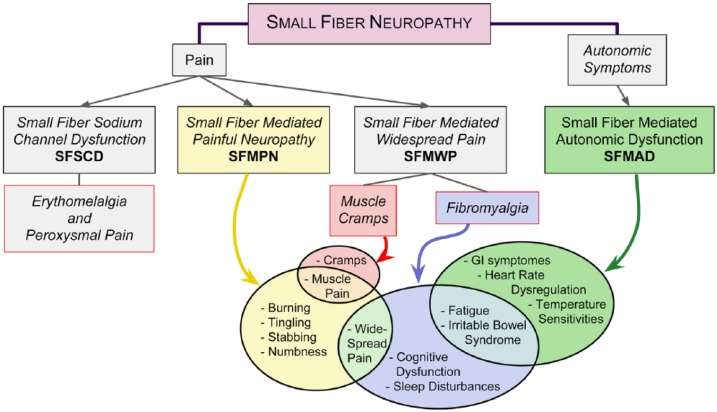
This chart groups commonly reported SFN symptoms by clinical domain—sensory and autonomic—and highlights representative examples within each category. Sensory features often include burning pain, tingling, numbness, allodynia, and hyperalgesia; autonomic features may involve temperature and sweating changes, gastrointestinal and cardiovascular effects, ocular/oral dryness, and bladder symptoms. It offers a concise overview of how symptoms cluster rather than an exhaustive or diagnostic list, and individual experiences vary.
Image from Levine TD (2018), Journal of Central Nervous System Disease, CC BY‑NC 4.0.
Length-Dependent Pattern
Most common: Symptoms start in the toes and feet, gradually moving up the legs. Hands may be affected later.
Non-Length-Dependent Pattern
Symptoms can appear anywhere on the body, including face, trunk, or proximal limbs.
Patchy Distribution
Irregular pattern affecting random areas of the body.
📊 Symptom Severity Scale
Mild (1-3)
Occasional discomfort, doesn't interfere with daily activities
Moderate (4-6)
Regular symptoms that sometimes limit activities
Severe (7-10)
Constant, debilitating symptoms that significantly impact quality of life
📝 Tracking Your Symptoms
Daily Journal
Record symptom intensity, timing, and triggers on a scale of 1-10
Activity Impact
Note how symptoms affect work, sleep, exercise, and daily tasks
Medication Response
Track which treatments help and their effectiveness over time
Trigger Identification
Look for patterns related to weather, stress, activity, or diet
🚨 When to Seek Medical Attention
Urgent Care Needed:
- Sudden onset of severe symptoms
- Rapid progression of numbness
- Signs of infection in numb areas
- Severe balance problems or falls
- Autonomic symptoms affecting heart rate or blood pressure